The Circulatory System
The aorta is the largest artery in the human body. It carries oxygen-rich blood from the heart to the abdomen, pelvis, and legs.
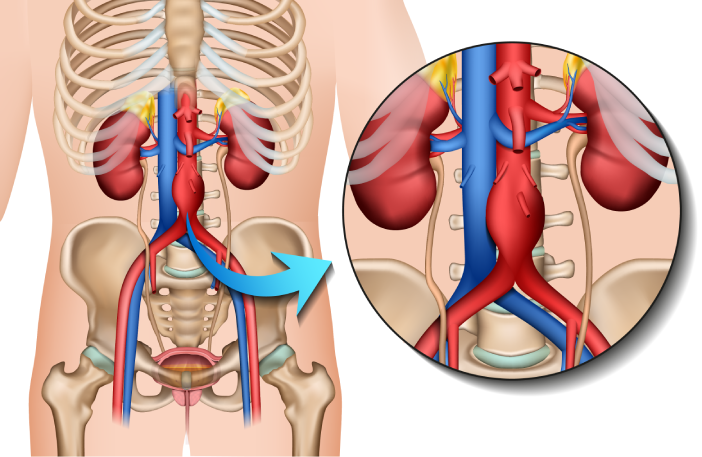
The abdominal portion of the aorta supplies vital organs and lower limbs. When the wall of this artery weakens, it can gradually dilate, forming an abdominal aortic aneurysm (AAA).
This dilation increases wall stress and, if left untreated, may lead to rupture — a life-threatening emergency. Because AAA often develops silently, understanding its circulatory role is essential for early detection.
What Is an Abdominal Aortic Aneurysm?
An abdominal aortic aneurysm is a permanent and localized enlargement of the abdominal aorta, defined as a diameter 50% greater than normal.
- The normal abdominal aorta measures approximately 1.5–2.5 cm.
- An aneurysm most commonly forms below the renal arteries.
AAA usually progresses slowly and may remain asymptomatic for years. The primary concern is the risk of rupture, which increases as the aneurysm enlarges.
Stages of Abdominal Aortic Aneurysm
Clinical classification showing progressive vessel dilation and increasing rupture risk
- Low immediate rupture risk
- Regular monitoring recommended
- Increased wall stress
- Closer ultrasound surveillance required
- High risk of rupture
- Intervention often recommended
- Sudden severe abdominal or back pain
- Medical emergency
- Immediate surgical care required
What are the Risk Factors?
Several factors increase the likelihood of developing an abdominal aortic aneurysm:
Age
Risk increases after 65
Male sex
More common in men
Smoking
Strongest modifiable risk factor
High blood pressure
Weakens arterial walls
Atherosclerosis
Plaque buildup in arteries
Family history
Genetic predisposition
Symptoms & Consequences
Most AAAs are asymptomatic. When present, symptoms may include:
Symptoms
- Deep abdominal discomfort
- Lower back pain
- Pulsating sensation in the abdomen
Possible Consequences
- Progressive aneurysm enlargement
- Aortic rupture
- Severe internal bleeding
- Life-threatening shock
When to Consult?
Immediate medical attention is required if sudden abdominal or back pain occurs, especially in patients with known aneurysms.
Diagnosis of Abdominal Aortic Aneurysm
Early diagnosis allows safe monitoring and timely intervention.
Clinical Examination
Physical assessment may detect large aneurysms in some patients.
Abdominal Ultrasound
A non-invasive, painless examination used for screening, diagnosis, and follow-up.
CT Scan (if required)
Provides precise anatomical details for surgical planning or suspected complications.
Why Early Treatment Matters
- Reduce the risk of rupture
- Allow planned intervention instead of emergency surgery
- Improve survival and long-term outcomes
Prevention & Recommendations
Depend on aneurysm size, growth rate and patient condition.

- Quit smoking
- Control blood pressure
- Manage cholesterol levels
- Maintain a healthy weight
- Follow cardiovascular prevention guidelines

- Regular ultrasound monitoring
- Medical management of risk factors
- Surgical or endovascular repair when indicated. Referrals are provided by Dr. Larose.
Frequently Asked Questions
Is Abdominal Aortic Aneurysm dangerous?
Yes. The risk increases with aneurysm size and growth rate.
Can Abdominal Aortic Aneurysm be prevented?
Risk can be reduced through smoking cessation and cardiovascular health management.
Is screening painful?
No. Abdominal ultrasound is painless and non-invasive.
How often is monitoring required?
Follow-up intervals depend on aneurysm size and growth.
Does Abdominal Aortic Aneurysm cause symptoms early?
Most patients have no symptoms until advanced stages.