The Circulatory System
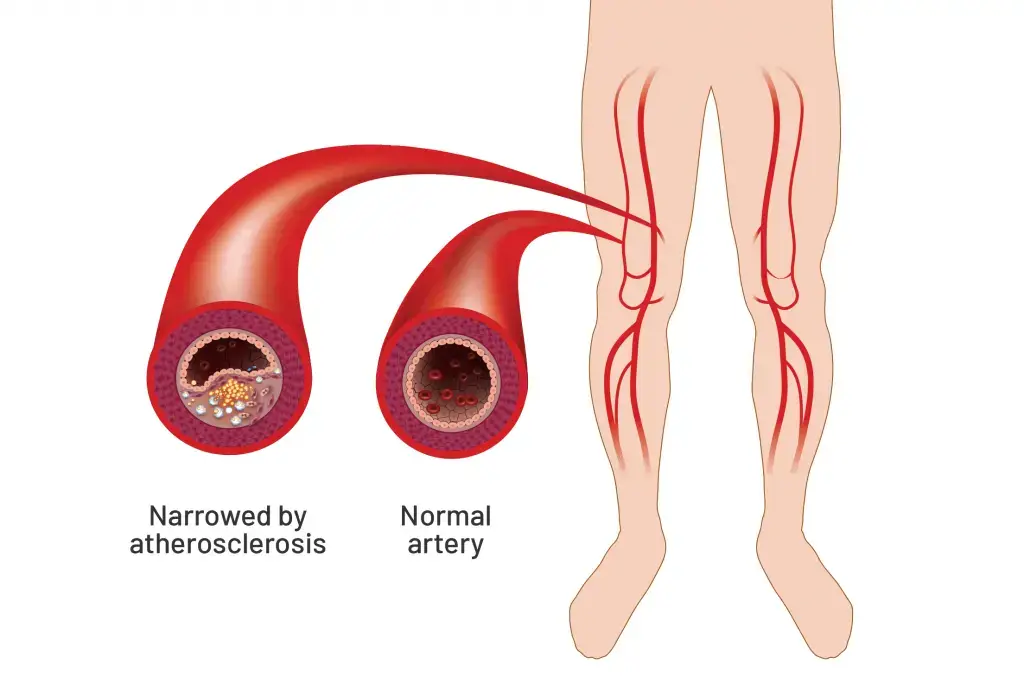
Arteries are blood vessels responsible for carrying oxygen-rich blood from the heart to the organs and limbs. In the lower extremities, these arteries supply muscles, skin, and tissues with the oxygen and nutrients required for normal function.
Peripheral arterial disease (PAD) occurs when these arteries become narrowed or blocked, most commonly due to atherosclerosis. Reduced blood flow limits oxygen delivery to the legs, particularly during physical activity, leading to pain and functional limitation.
PAD is a progressive condition and an important marker of generalized cardiovascular disease.
What is Peripheral Arterial Disease?
Peripheral arterial disease is a condition caused by partial or complete blockage of arteries supplying the lower limbs, most often resulting from plaque buildup inside the arterial walls.
As the arteries narrow:
- Blood flow to the legs decreases
- Muscles receive insufficient oxygen during activity
- Symptoms develop, particularly while walking
PAD may affect one or both legs and can progress silently before symptoms appear.
Stages of Peripheral Arterial Disease
Progressive narrowing severity levels and associated risk of reduced cerebral blood flow
- Reduced blood flow without noticeable symptoms
- Often detected during vascular screening
- Leg pain or cramping during walking
- Symptoms improve with rest
- Persistent pain at rest, often worse at night
- Indicates severe arterial narrowing
- Non-healing wounds or ulcers
- Risk of infection and tissue loss
What are the Risk Factors?
Several factors increase the risk of developing peripheral arterial disease:
Age
Risk increases after 60
Diabetes
Damages blood vessels
Smoking
Primary modifiable risk factor
High blood pressure
Accelerates arterial narrowing
High cholesterol
Contributes to plaque formation
Family history
Genetic predisposition
Symptoms & Consequences
Symptoms vary depending on disease severity and may include:
Symptoms
- Leg pain or cramping during walking
- Fatigue or heaviness in the legs
- Cold feet or toes
- Numbness or weakness
Possible Consequences
- Progressive limitation in walking ability
- Chronic pain
- Non-healing wounds or ulcers
- Risk of limb-threatening ischemia
When to Consult?
Medical evaluation is recommended if leg pain occurs during walking, at rest, or if wounds fail to heal.
Diagnosis of Peripheral Arterial Disease
Early diagnosis allows timely intervention and prevents disease progression.
Clinical Assessment
Review of symptoms, cardiovascular risk factors, and physical examination of pulses.
Doppler Ultrasound
A non-invasive test that evaluates blood flow and identifies arterial narrowing.
Additional Testing (if required)
Further imaging may be used to assess disease severity and guide treatment planning.
Why Early Treatment Matters
- Improves walking ability
- Reduces pain and disability
- Prevents limb-threatening complications
- Lowers overall cardiovascular risk
Prevention & Recommendations
Tailored based on disease severity and patient health status.

- Quit smoking
- Control blood sugar levels
- Manage blood pressure and cholesterol
- Engage in regular walking or exercise programs
- Maintain a healthy weight

- Medical management of risk factors
- Supervised exercise therapy
- Endovascular or surgical intervention when indicated. Referrals are provided by Dr. Larose.
Frequently Asked Questions
Is peripheral arterial disease serious?
Yes. Peripheral Arterial Disease increases the risk of cardiovascular events and limb complications.
Does Peripheral Arterial Disease always cause pain?
No. Many patients are asymptomatic in early stages.
Can Peripheral Arterial Disease be reversed?
While plaque cannot be removed completely, progression can be slowed and symptoms improved.
Is walking good for Peripheral Arterial Disease?
Yes. Supervised walking programs are a key part of treatment.
When is surgery required?
Surgery or endovascular treatment is considered for severe or disabling disease.